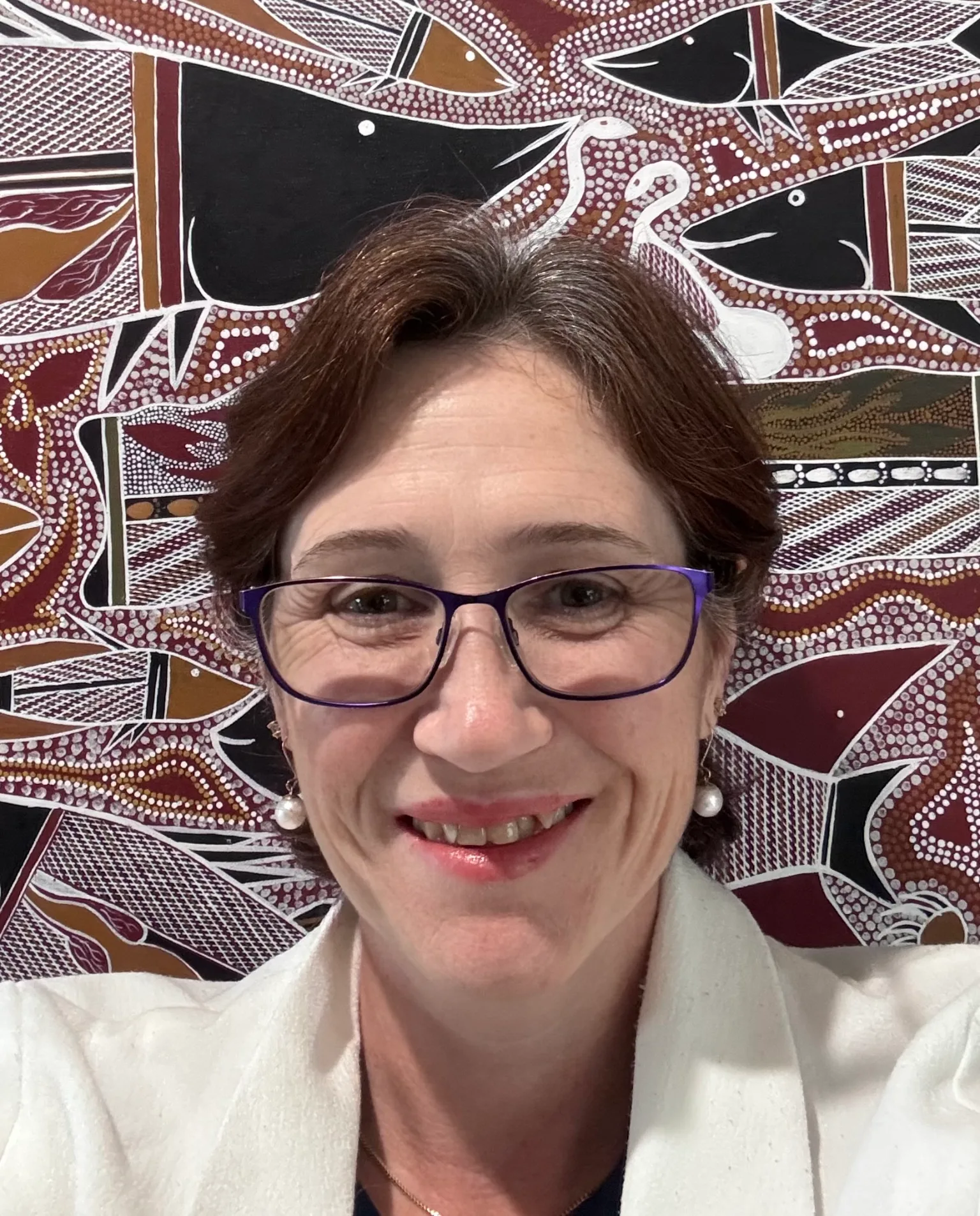
Today, we talk with Leanne Burn, our new Manager, Lived Experience Sector Partnerships, about her journey from frontline peer work and system reform at Monash Health to leading statewide partnerships that strengthen Lived and Living Experience leadership across Victoria.
What drew you to the Collaborative Centre and to this role, and what impact do you hope to have in the Lived and Living Experience sector?
As someone with a lived experience, I was drawn to the Collaborative Centre role as I saw an opportunity to bring lived experience to the heart of system-wide change. I’ve always been motivated by roles where I can create spaces that value and amplify the voices of those with lived experience, and the Centre embodies that commitment. It felt like a natural next step for me. I have been working in dedicated lived experience roles for almost 5 years, and want to contribute to meaningful, sector-wide initiatives. I have a passion for learning and would like to grow alongside others who share my vision for significantly improved mental health and wellbeing services.
The impact I hope to have is to strengthen the workforce, elevate lived experience expertise, and ensure it is embedded across all levels of the mental health and wellbeing sector. I want to help build systems where LLE roles are not only recognised but empowered, supported, and integrated—where people feel their contributions genuinely shape services, policy, and culture. Ultimately, my goal is to foster a sector that is more inclusive, collaborative, and responsive, where lived experience drives lasting, positive change for both individuals and the broader system.
You’ve worked across inpatient peer leadership, statewide reform projects, and major service redesign—what are the key lessons from that journey that shape the way you approach partnership and systems change?
One of the most significant lessons for me is that partnerships aren’t about having all the answers or pushing for a specific outcome. It’s about fostering a culture where people feel safe to share their experiences and insights. I’ve learned that sitting with discomfort—whether it’s the uncertainty of a conversation or the challenge of confronting entrenched systems—can be a powerful space for transformation. It’s uncomfortable, but it’s also where meaningful change happens. It requires patience and humility, recognising that everyone brings something invaluable to the table, and no single perspective holds all the answers.
In the context of reform and redesign, I’ve learned the importance of curiosity—not just about how things work, but about how they feel for the people affected. Change is not just a technical process; it’s a deeply human one. Sometimes, our greatest achievements come from shifting how we engage with one another not from implementing new systems. Often that means asking questions we don’t have answers to or taking a step back to reflect on how power dynamics play out in conversations about change.
I’ve also come to appreciate that systems is not linear or tidy. It’s often a messy, slow process that requires flexibility and ongoing reflection. I’ve seen firsthand how small, organic shifts—whether through peer leadership or involving people with lived experience at every stage of a project—can result in more sustainable, meaningful outcomes. Being open to learning, adapting, and rethinking your approach along the way is crucial.
Ultimately, my journey has taught me that partnership in systems change is about building trust, being genuinely curious about the lived experiences of others, and having the courage to sit with discomfort as we navigate the complexities of system level reform. It’s a journey that requires constant humility and a willingness to grow alongside others, learning from both our successes and our failures.
From your perspective, what does a thriving LLE workforce look like, and where do you see the biggest opportunities for growth across the sector?
A thriving LLEW is one where people with lived experience are not just included but genuinely hold power at every level—from decision-making to service delivery. It’s about creating a culture where lived experience is seen as a valuable and legitimate form of expertise, alongside professional qualifications. The workforce thrives when there’s ongoing support, training, and mentorship, and when people are given opportunities to grow and bring their full selves to their work.
In terms of opportunities for growth, one of the biggest areas I see is embedding LLE roles more deeply across the sector. This means expanding the number of LLE positions and ensuring they’re integrated into all aspects of service delivery, from leadership to frontline roles. It also means creating more pathways for LLE workers to upskill, have their voices heard in policy and reform, and shape the way services are designed and delivered.
In essence, a thriving LLE workforce is one that is well-supported, valued, and integrated into all aspects of mental health and wellbeing work. The opportunities for growth are there—we just need to continue breaking down barriers and building more inclusive, collaborative spaces for lived experience expertise to flourish.
You’ve moved through very different industries and roles over your career — what has been the constant thread or motivation that’s guided you through those transitions?
The constant thread throughout my career has always been a deep commitment to people—whether it's supporting customers or creating a space for others to share their experiences and feel heard. In both industries, I’ve found fulfillment in roles that allow me to be part of something bigger than myself, to empower others, and to make systems work better for the people they’re meant to serve.
In retail, it was about understanding and meeting the needs of customers while leading teams in a way that nurtured growth and collaboration. In mental health, that commitment shifted toward empowering individuals with lived experience, helping them to feel valued and supported, and advocating for change within systems that often overlook their voices. Connection is a strong motivating factor for me —understanding where people are coming from and helping create environments where they can succeed.
What’s guided me through those transitions has been the belief that authentic engagement and empathetic leadership can make a tangible difference, regardless of the sector. Whether it’s helping a customer or advocating for policy change in mental health, the goal is the same: to build trust, support others in their growth, and create positive, lasting change. The core motivation hasn’t changed, just the context in which I apply it. It’s all about making a real impact in people’s lives.
What helps you stay grounded, connected and hopeful in this work, and what brings you joy outside of your professional life?
Staying grounded comes down to remembering why I’m here—to create spaces where people feel seen, heard, and valued. In a sector that can often feel overwhelming or draining, I make a conscious effort to stay connected to the lived experiences of those I’m working alongside. When things get tough, I remind myself that small wins matter—whether it’s a breakthrough in a conversation or seeing a positive shift in someone’s journey. Those moments keep me focused and hopeful.
Outside of work, I love spending time with my family, cooking, getting into the veggie patch to reset or going for a long walk. We live is West Gippsland, which is a beautiful part of Victoria, so there are lots of lovely open spaces to explore. These activities keep me balanced and remind me that life is about more than just work—it’s about being fully present and connected to both the people and the world around me.
Quickfire questions:
- Coffee or tea? It really depends on the time of the day. I do like lemon and ginger tea, and I’m inclined to sneak in a red bull if I have a lot going on!!
- A book, podcast or show you’re loving right now? My favourite podcast is The Happiness Lab with Dr Laurie Santos. She’s a professor of psychology at Yale and a happiness expert. It’s one of many social science/wellbeing podcasts I listen to.
- Go-to way to unwind after a big week? I like to go on a long walk. There are lots of lovely walking tracks where we live. Either that or sleep in on a Saturday until lunchtime!!
- One word colleagues would use to describe you? Passionate.
- Most meaningful advice you’ve ever received? There are two things that really resonate with me. The first is not to make assumptions. “You make an ‘ass of u and me’ when you assume” and “look for the evidence”. The second one is great for combatting any negative thoughts or the terrible imposter syndrome.
- If you weren’t working in mental health, what would you be doing? I really don’t know. This is my second career, as I spent over 20 years working in retail. I was drawn to lived experience roles in the mental health and wellbeing sector following my own journey with complex mental health challenges.
- A small thing that always makes you smile? Our dogs and cats are always doing something that makes me smile or laugh. Animals are always so genuine and authentic.